
Sichuan’s reputation as the "Land of Abundance" was not a gift from nature. It was an administrative miracle. In 256 BC, a local governor named Li Bing made a decision that changed Chinese history: he decided not to build a dam.

By choosing to redirect water rather than block it, he created the Dujiangyan Irrigation System—the world’s oldest functioning non-dam hydraulic project. This single feat of engineering transformed the flood-prone Chengdu Plain into China’s most fertile granary, eventually fueling the armies that unified the first Chinese Empire.

Five centuries later, a monk named Haitong spent 90 years carving the world’s tallest pre-modern statue into a river cliff to calm the turbulent currents of Leshan. At Korascale, we decode these UNESCO icons not as mere monuments, but as evidence of a profound Chinese philosophy: Harmony, not Conquest.
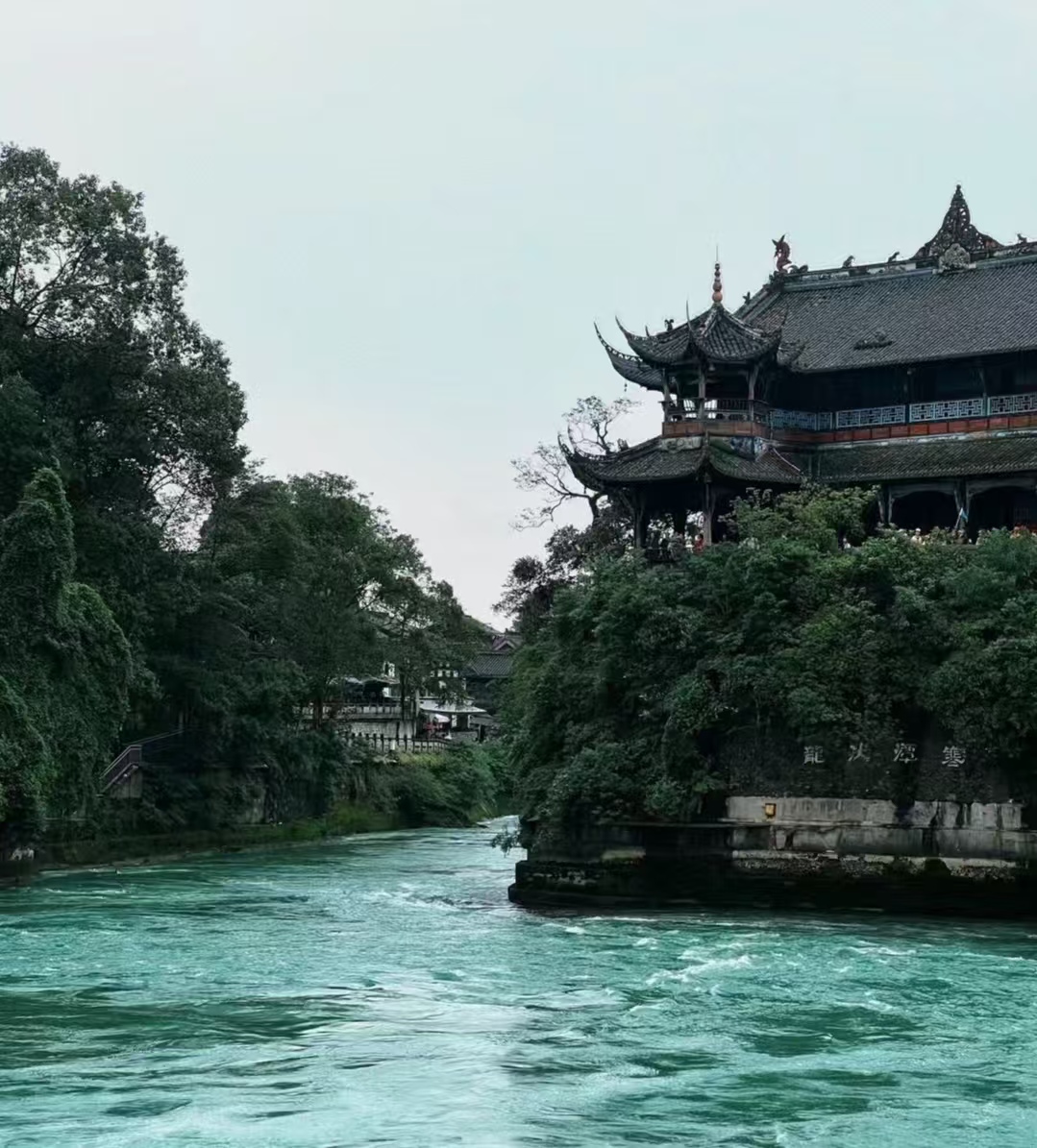
Dujiangyan Irrigation System Yuzui Fish Mouth Levee and Baopingkou Channel — Li Bing Warring States China, Korascale.

Dujiangyan Irrigation System Yuzui Fish Mouth Levee and Baopingkou Channel — Li Bing Warring States China, Korascale.

The Algorithm of Flow: Dujiangyan’s 2,280-Year Success

Dujiangyan is a masterpiece of "Passive Engineering." It operates on three ingenious physical components that require no electricity, no moving parts, and almost no modern maintenance.

1. The Fish Mouth (Yuzui): The Centrifugal Splitter

This levee divides the Min River into an Inner and Outer canal. Using bend hydraulics, it automatically adjusts water distribution: in the dry season, 60% of the water flows into the Inner canal for irrigation; during floods, 60% is automatically diverted to the Outer canal to prevent overflow.

2. The Flying Sand Weir (Feishaye): The Vortex Desilter

A gap in the levee that utilizes vortex flows to automatically eject excess silt and pebbles back into the main river, keeping the irrigation channels clear for over two millennia.

3. The Bottle Neck (Baopingkou): The Physical Valve

Carved through a solid rock mountain long before the invention of gunpowder (using fire and water to crack the stone), this narrow opening acts as a natural flow regulator, capping the amount of water that can enter the Chengdu Plain.

The Earthquake Proof: During the 7.9-magnitude Wenchuan earthquake in 2008, modern concrete dams struggled, but Dujiangyan remained intact. Its "flexible" structure of bamboo cages and stones absorbed the seismic energy—a 2,000-year-old validation of Li Bing’s design philosophy.
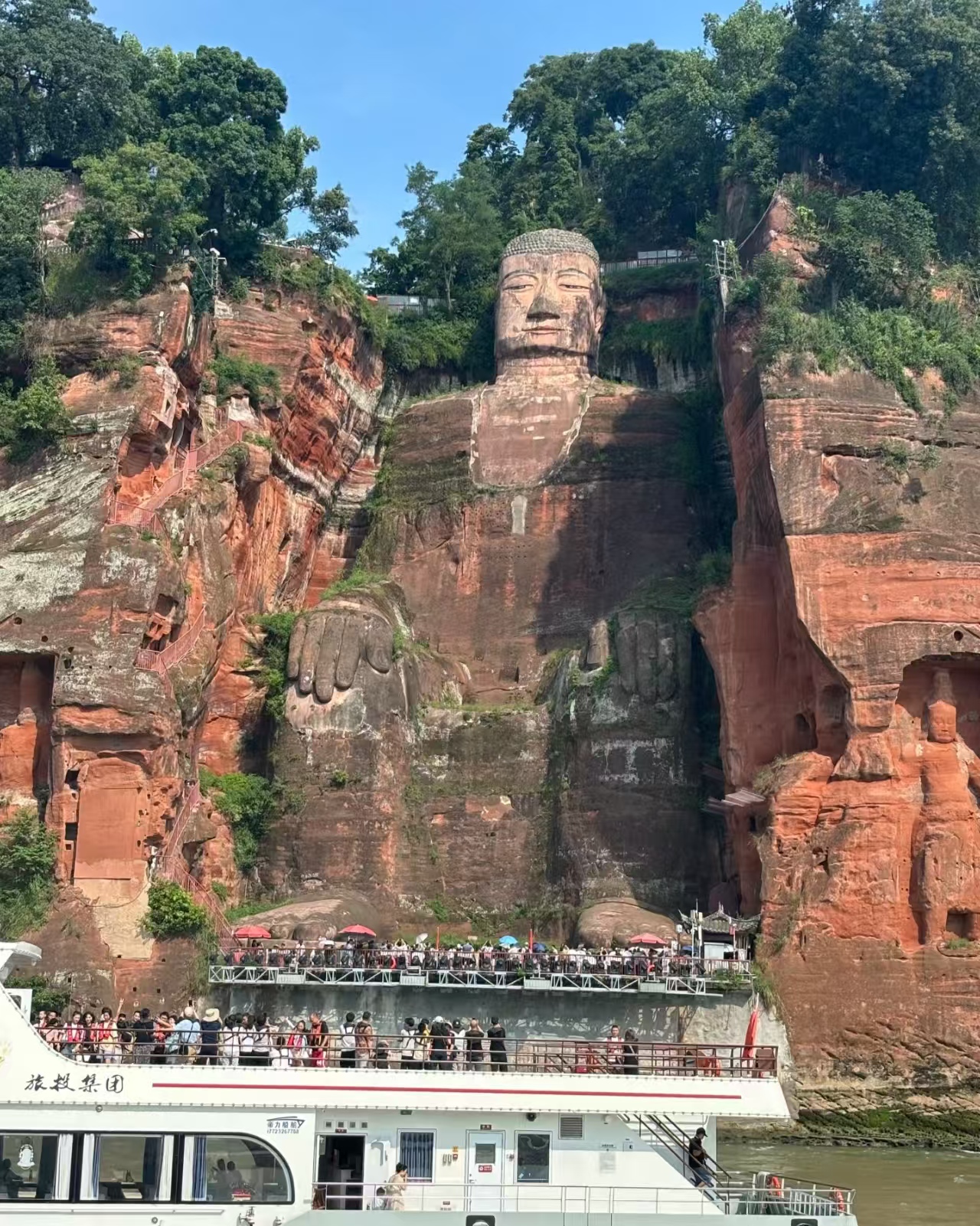
Leshan Giant Buddha Lingyun Mountain and Tang Dynasty Buddhist Sculpture — UNESCO 1996 private boat tour by Korascale.

Leshan Giant Buddha Lingyun Mountain and Tang Dynasty Buddhist Sculpture — UNESCO 1996 private boat tour by Korascale.

The Giant of Leshan: Engineering the Divine

Standing at 71 meters, the Leshan Giant Buddha is a marvel of the Tang Dynasty. While most see a religious icon, we see a sophisticated structural achievement hidden in plain sight.

The Hidden Hardware:

  • The Ear Secret: Almost no guidebook mentions that the Buddha’s 7-meter-long ears are not carved from stone, but crafted from wood and clay attached to the head. This allowed the engineers to achieve a scale and detail impossible in solid rock.
  • The 1,200-Year Drainage System: Behind the Buddha’s hair buns, collar, and chest lies a complex network of internal drainage pipes. This system prevents weathering by diverting rainwater away from the body—it is more durable than the plumbing in most modern skyscrapers.
  • The Scientific Miracle: Monk Haitong believed Buddha would calm the rivers. Ironically, the massive amount of stone carved out and dumped into the river actually altered the current, filling in the dangerous shoals and literally making the waters safer for navigation.
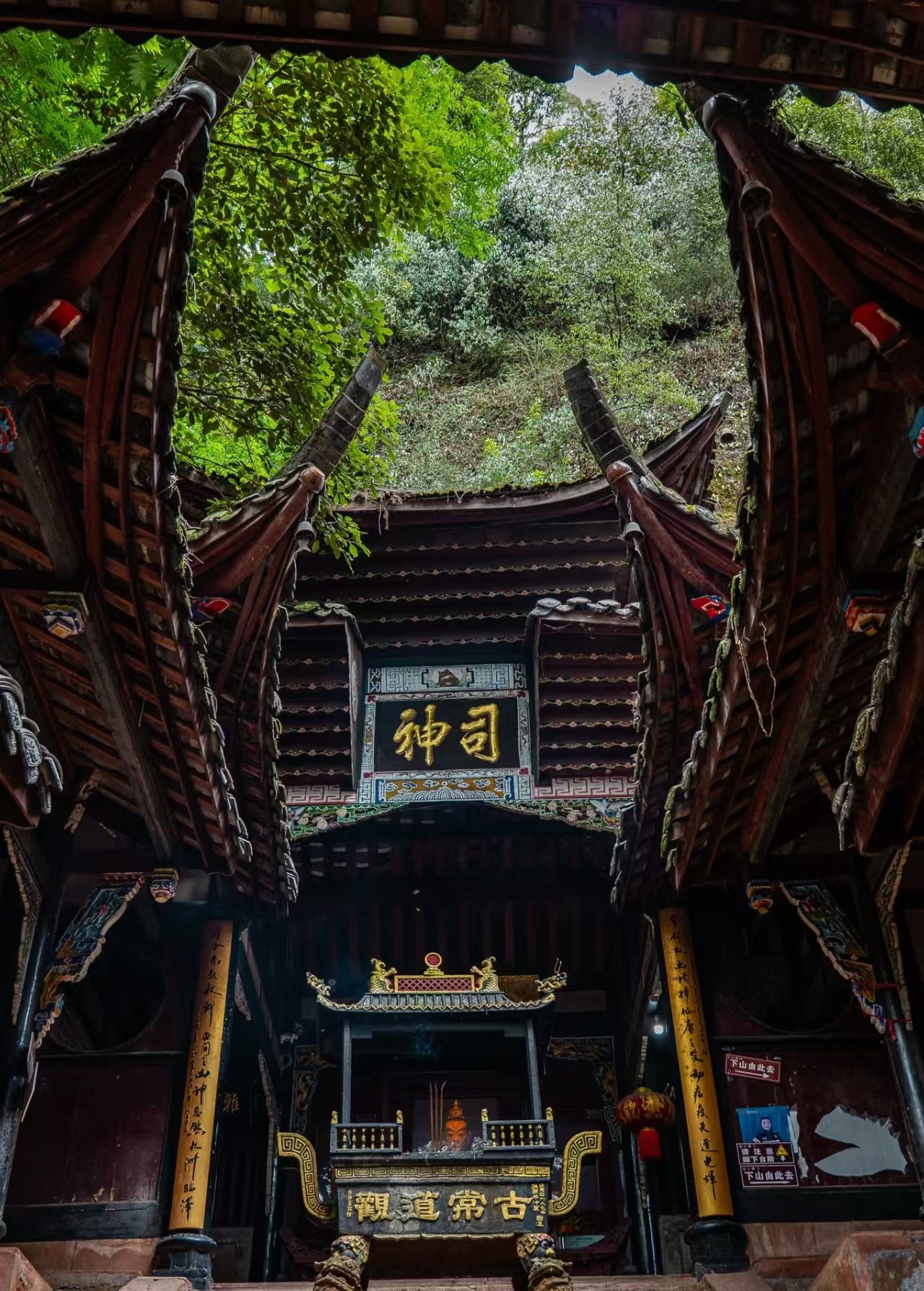
Erwang Temple Li Bing and Mount Qingcheng Taoism — Sichuan UNESCO Sites private day tour by Korascale Bespoke Travel.

Erwang Temple Li Bing and Mount Qingcheng Taoism — Sichuan UNESCO Sites private day tour by Korascale Bespoke Travel.

The Korascale Protocol: A Private Duo-UNESCO Day

Navigating these two massive sites in a single day requires the precision of a Swiss watch. Our Private Sichuan Engineering Day Trip is designed to bypass the 90% of tourists who only see the surface.

The Itinerary:

  • 07:30 — Departure: Private transfer from Chengdu.
  • 08:30 – 11:30 — Dujiangyan Depth: We start at the Two Kings Temple (the highest vantage point) to visualize the entire system’s logic before walking across the Anlan Suspension Bridge to touch the "Fish Mouth" levee.
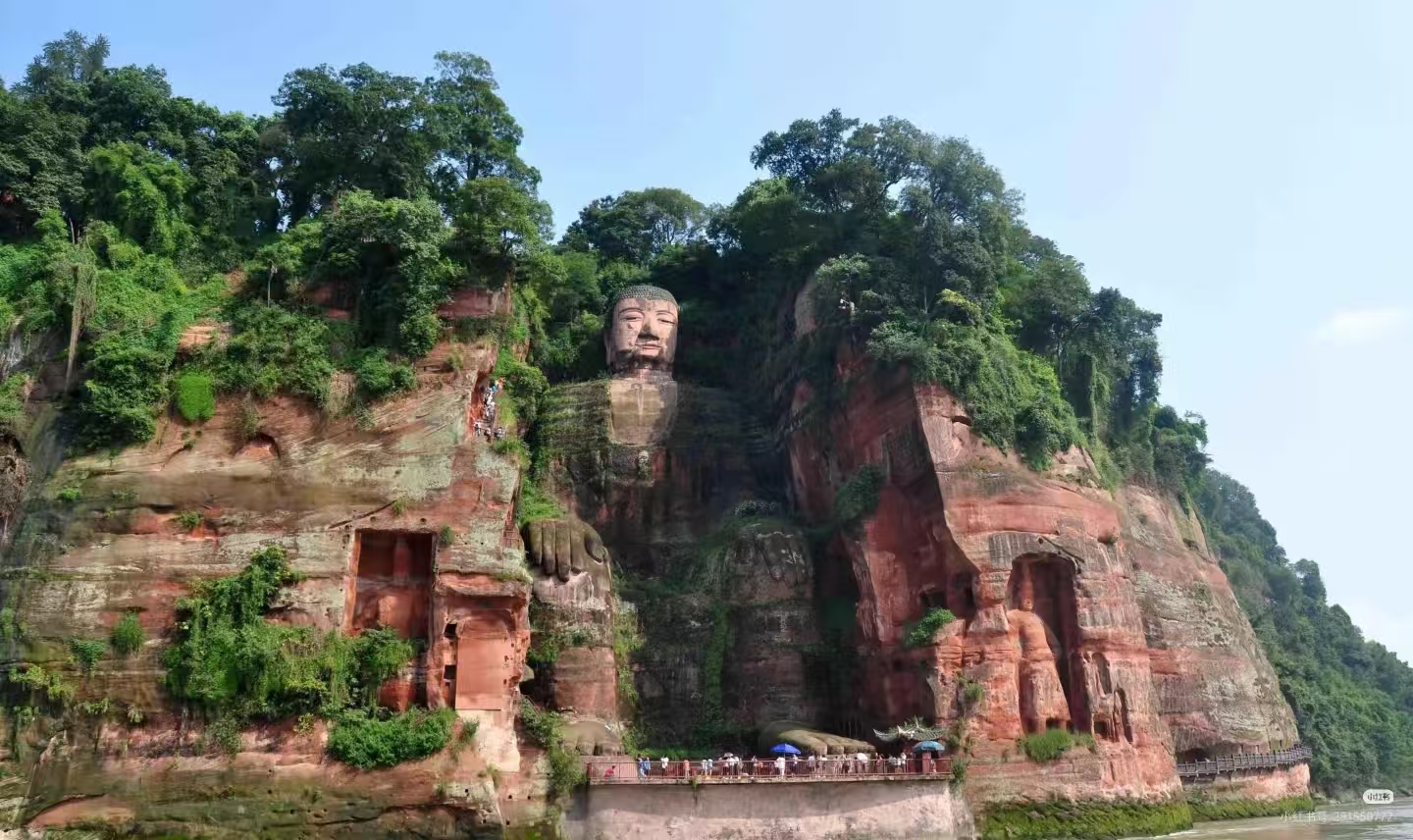
  • 14:00 – 17:00 — Leshan Dual Perspective: * Phase 1: The River View. We board a private boat to see the "Mountain is a Buddha" silhouette—the only way to appreciate the true scale.
  • Phase 2: The Nine-Turn Plank Road. We walk the narrow cliff path from the Buddha’s ear down to his toes, feeling the verticality of the Tang Dynasty’s ambition.

The Korascale Difference:

While standard tours offer a "look," we offer a "reading." Our guides are trained in hydraulic history and Tang Dynasty architecture, turning a walk through scenic parks into a masterclass on how ancient China solved the world's most difficult engineering problems.
Dujiangyan Leshan day trip from Chengdu guide 2026Dujiangyan irrigation system how does it work engineeringLeshan Giant Buddha private tour best way to seeDujiangyanDujiangyan Irrigation SystemMin River SichuanErwang TempleMount QingchengLeshanLeshan Giant BuddhaLingyun MountainMount EmeiChengduYuzui Fish Mouth LeveeFeishayan SpillwayBaopingkou ChannelAncient Hydraulic Engineering ChinaTang Dynasty Buddhist SculptureMaitreya BuddhaGiant Buddha Drainage SystemUNESCO World Heritage Dujiangyan 2000UNESCO World Heritage Leshan 1996Warring States Period ChinaTang Dynasty ChinaChengdu Day Trip DujiangyanLeshan Buddha Boat TourSichuan UNESCO SitesBest Way to See Leshan BuddhaBespoke Travel ChinaKorascale

Frequently Asked Questions

How does the Dujiangyan irrigation system work without a dam, and why has it lasted 2,280 years?

˅
The Dujiangyan system, built around 256 BCE by Li Bing and his son under the Qin state, is the oldest large-scale hydraulic engineering project still in use in the world — and its most remarkable feature is that it achieves flood control, silt management, and precision irrigation entirely through physical geometry rather than dams or mechanical valves. Three components work in sequence. The Fish Mouth Levee (Yuzui), an artificial island shaped like a fish's head, splits the Min River into an inner channel (for irrigation) and an outer channel (for flood discharge); the design exploits hydraulic centrifugal force so that during flood season 60% of water flows to the outer channel automatically, and during dry season the ratio inverts to 60% inner without any human intervention. The Feishayan Spillway connects the two channels at a precisely calibrated height, allowing excess water to spill back to the outer channel while using natural vortex action to expel silt from the inner channel. The Bottle-Neck Channel (Baopingkou), carved through Mount Yulei, acts as a natural flow regulator — its narrow shape limits intake during high water and ensures sufficient flow during low water. The system's longevity comes from its flexibility: the original construction used bamboo baskets filled with stones (Zhulong), a method that absorbs seismic energy rather than shattering — which is why the 2008 Wenchuan earthquake (magnitude 7.9) left the main structure largely intact while modern dams in the region sustained damage.

What are the most surprising facts about the Leshan Giant Buddha?

˅
Several details about the Leshan Giant Buddha that most visitors — and most travel guides — miss. First, the Buddha's 7-metre ears are not carved from the cliff face: they are made of wood covered with mud and attached to the stone, a sophisticated ancient engineering technique that allowed the oversized features to be built without compromising the structural integrity of the cliff. Second, the statue has a drainage system carved into its hair, collar, chest, and behind its ears that has been functioning continuously for over 1,200 years — an engineering achievement that outlasts the waterproofing of most modern structures. Third, the sheer volume of rock removed from the cliff during construction was deposited into the river below, which actually changed the currents at the confluence of the three rivers and made the waterway genuinely safer for passing vessels — meaning that Monk Haitong's religious intention of calming the waters was accidentally achieved through civil engineering. Fourth, the entire mountain range behind the Buddha is considered to form the silhouette of a reclining Buddha when viewed from the river, with the Giant Buddha itself positioned as its heart.

Is it possible to visit both Dujiangyan and Leshan Giant Buddha in a single day from Chengdu?

˅
Yes — by private vehicle, both sites can be visited meaningfully in a single full day. The practical sequence is: depart Chengdu early (around 7:30 AM), arrive at Dujiangyan in approximately one hour, and spend three hours at the irrigation system with enough time to walk the full circuit from Erwang Temple down through the Fish Mouth and Feishayan to Baopingkou, including the Fulong Temple where Li Bing's 2nd-century stone statue is displayed. Depart for Leshan after a light lunch in Dujiangyan (the two sites are approximately 2.5 to 3 hours apart by road), arriving by early afternoon for a boat trip on the river followed by the Nine Bends Plank Road descent past the Buddha's face. The boat trip is essential — from the water, the entire 71-metre figure is visible and the surrounding mountain silhouette forms the reclining Buddha shape that is invisible from any point on land. By private car, the return to Chengdu takes approximately 2 hours. This itinerary is not manageable by public transport without sacrificing meaningful time at one of the sites. Korascale coordinates this as a standard private day itinerary from its Chengdu base, with the option to add Mount Qingcheng's Taoist temples as a third component.

Who built Dujiangyan and why is Li Bing considered one of China's greatest engineers?

˅
Li Bing was appointed governor of the Shu region (present-day Sichuan) by the Qin king around 256 BCE with a specific mandate: control the Min River, which flooded the Chengdu Plain every spring with snowmelt from the Min Mountains. A dam was ruled out because the Qin state needed the river open for military supply vessels. Li Bing's solution — building an artificial levee to divide the river and cutting a channel through Mount Yulei with no explosives, using only fire and water to crack the rock — transformed the Chengdu Plain from a flood zone into China's most productive agricultural region within a generation. The surplus grain helped sustain the Qin military campaigns that unified China under Qin Shi Huang in 221 BCE, making Dujiangyan arguably one of the most consequential infrastructure projects in Chinese political history. A stone statue of Li Bing, dating from 174 AD (Eastern Han dynasty), was recovered from the riverbed in 1974 — it is the oldest known stone portrait of a named individual in China. During the Tang dynasty, a statue of Li Bing was placed in the river so that water reaching his shoulders indicated flood conditions and water below his calves indicated drought — making it an ancient automated monitoring device.

What is the best way to see the Leshan Giant Buddha — by boat or on foot?

˅
Both — and the visit is significantly incomplete without either. From the river by boat, you see the Buddha's full 71-metre seated figure simultaneously, including the surrounding mountain silhouette that forms the shape of a reclining Buddha (with the Giant Buddha as its heart) — a view that is physically impossible from any point on land. The boat approach also gives you the correct sense of the statue's scale in relation to the cliff, the three rivers, and Mount Emei across the water. The Nine Bends Plank Road descent on foot, however, takes you down alongside the Buddha from ear level to foot level — revealing the 1,021 individual stone-embedded hair curls, the massive hands resting on the knees, and the smallest toenail on which a person can sit. The drainage channels carved into the hair and collar are also only visible from the plank road. The ideal sequence is boat first (full-body overview, understand the scale), then plank road descent (close-up detail, read the engineering). Korascale pre-arranges river cruise tickets to avoid the queue at Leshan Dock, which can run to 45–90 minutes on peak days.