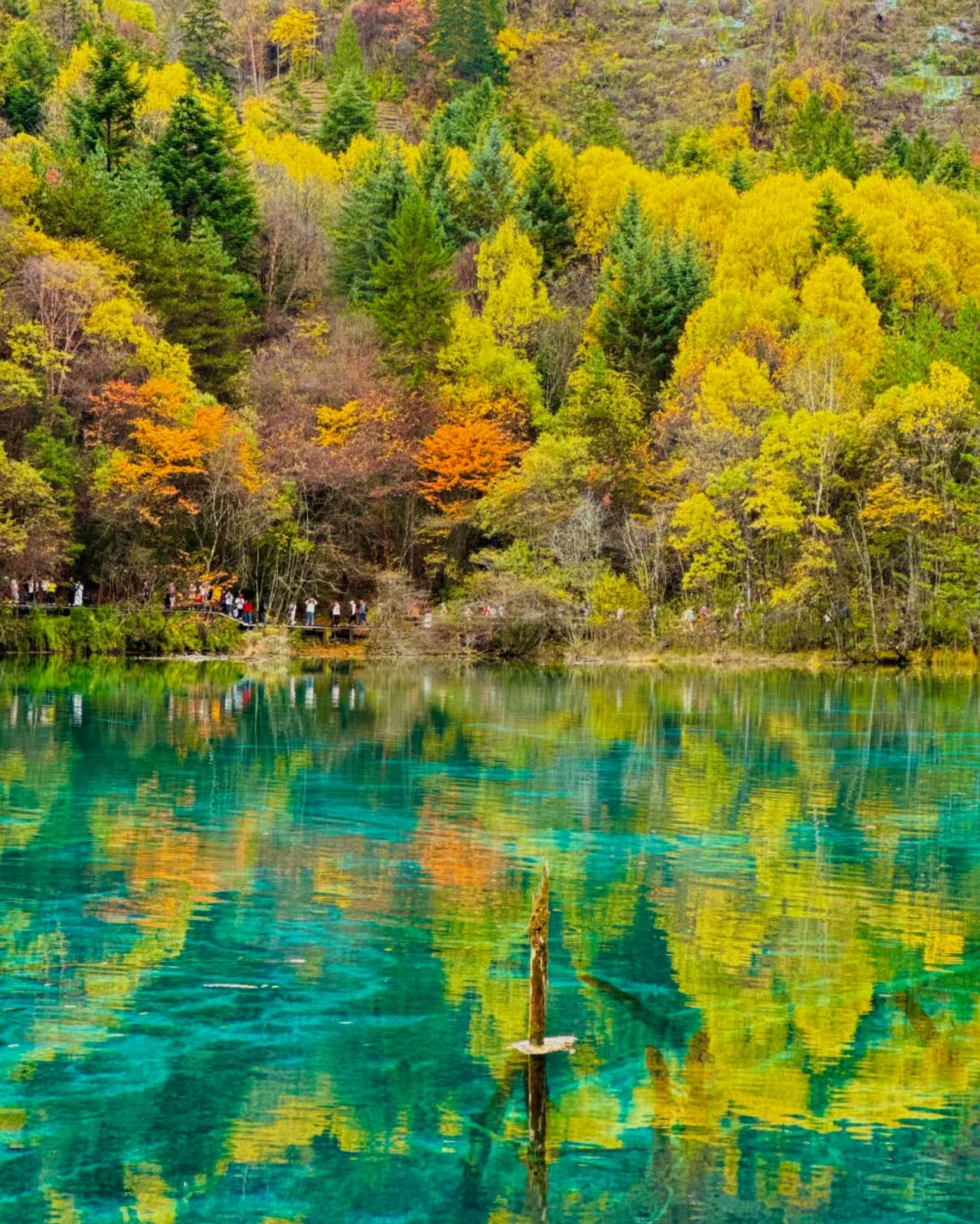
It is a common skepticism on social media: "The water in Jiuzhaigou must be filtered." But when scientists from the U.S. Geological Survey (USGS) arrived with spectral color charts, they confirmed a staggering reality—the color saturation of these lakes exceeds ordinary bodies of water by over 300%.

This is not a digital trick. It is a precise "Natural Pigment System" powered by high-altitude ultraviolet light, suspended calcium carbonate, and the chlorophyll of ancient aquatic forests. In the Five Flower Lake, clarity reaches 12 meters—six times the average for freshwater lakes. At Korascale, we invite you to look past the postcards and understand the hydrology of the "Fairyland."

A Hidden Valley: From Nine Villages to UNESCO Icons

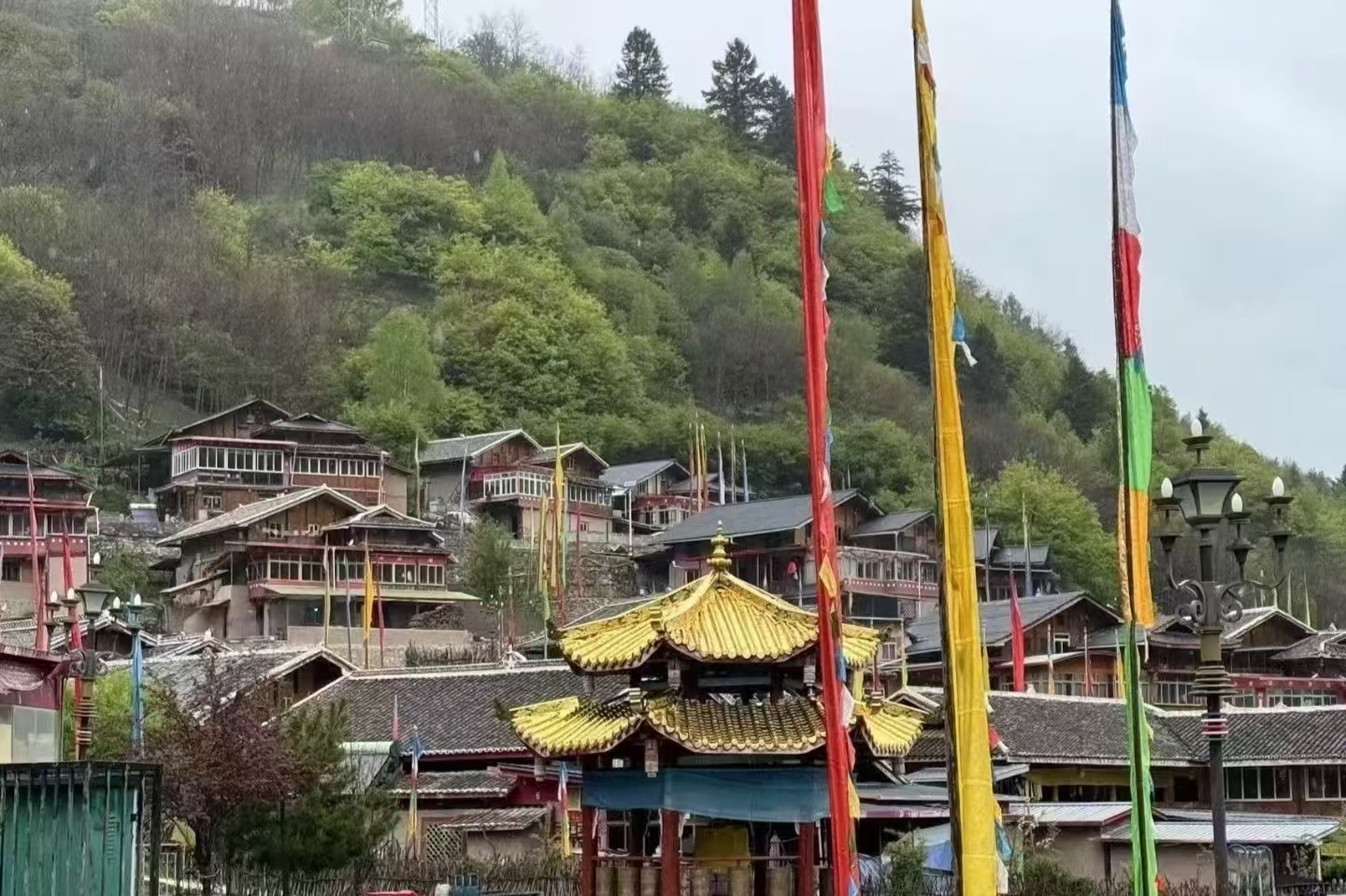
Before 1975, this 72,000-hectare Y-shaped sanctuary was virtually invisible to the outside world. For centuries, the residents of the nine Tibetan villages (hence the name Jiuzhaigou) lived in harmony with these "Haizi"—children of the sea.

Today, it is a global rarity: one of the few places on Earth to hold dual UNESCO honors as both a World Heritage site (1992) and a Biosphere Reserve (1997). This is a landscape shaped by Karst Hydrology, where the dissolving of limestone creates a labyrinth of subterranean rivers that feed the 108 translucent lakes above.

Jiuzhaigou: Why the Most Unreal Place in China Is Entirely Real | Five Flower Lake, UNESCO World Heritage 1992 - Korascale Bespoke Travel

Jiuzhaigou: Why the Most Unreal Place in China Is Entirely Real | Five Flower Lake, UNESCO World Heritage 1992 - Korascale Bespoke Travel

The Y-Valley Logic: Light, Motion, and Resurrection

To navigate Jiuzhaigou effectively, one must follow the sun. The park is a natural light studio divided into three primary arteries:

1. Rize Valley (The Essence)

Home to Five Flower Lake and Pearl Shoal Falls. The Korascale Strategy: Save this for the afternoon. Its southeast orientation means the mid-day sun hits the mineral-rich lake bed at the perfect angle to ignite the "Electric Blue" glow.

2. Zechawa Valley (The High Altitude)

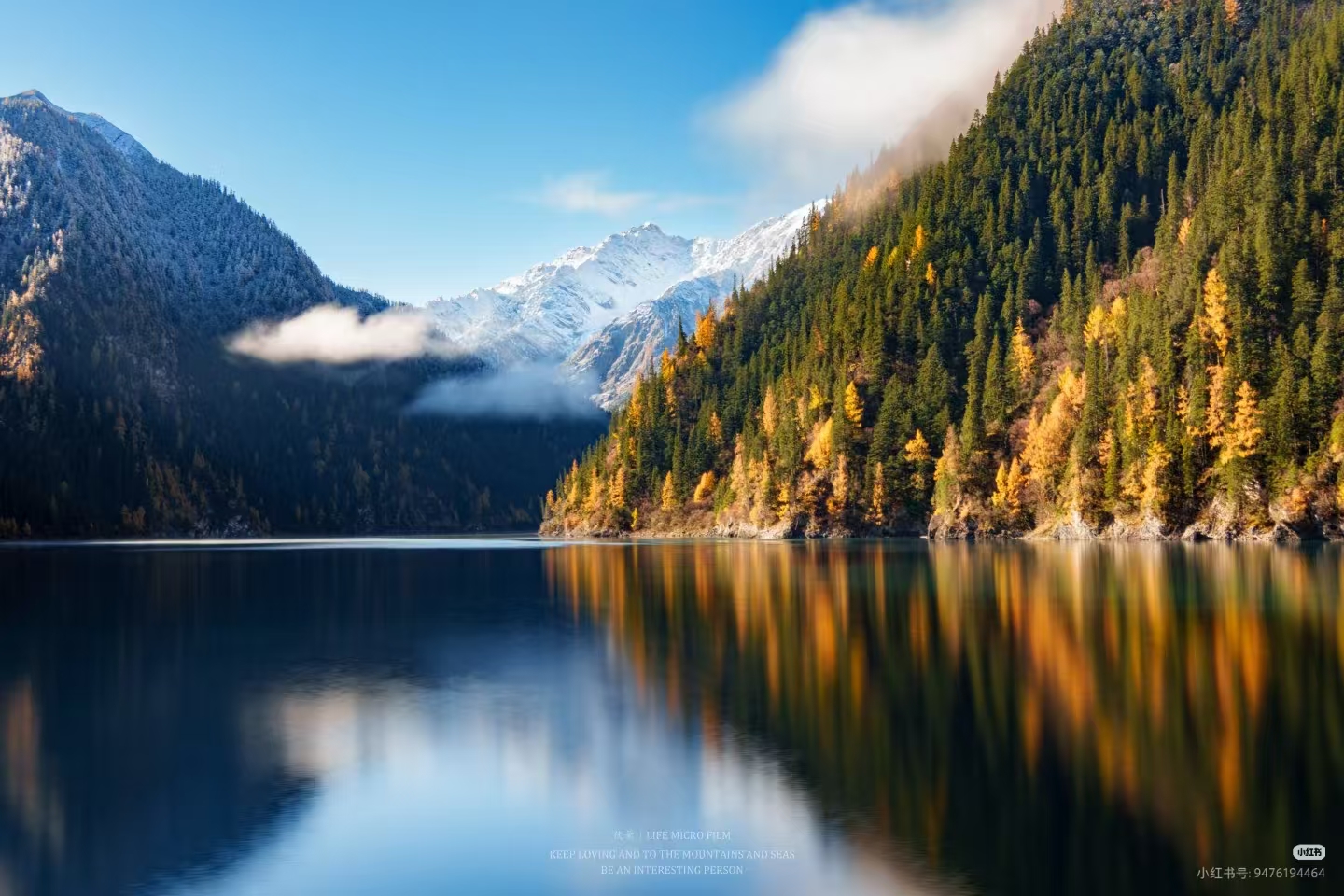
The highest point, reaching Long Lake at 3,102 metersThe Korascale Strategy: Visit in the morning. The shifting light creates a dramatic cyan-to-emerald gradient in the "Five-Color Pool." With 30% fewer crowds than Rize, this is a photographer’s sanctuary.

3. Shuzheng Valley (The Flow)

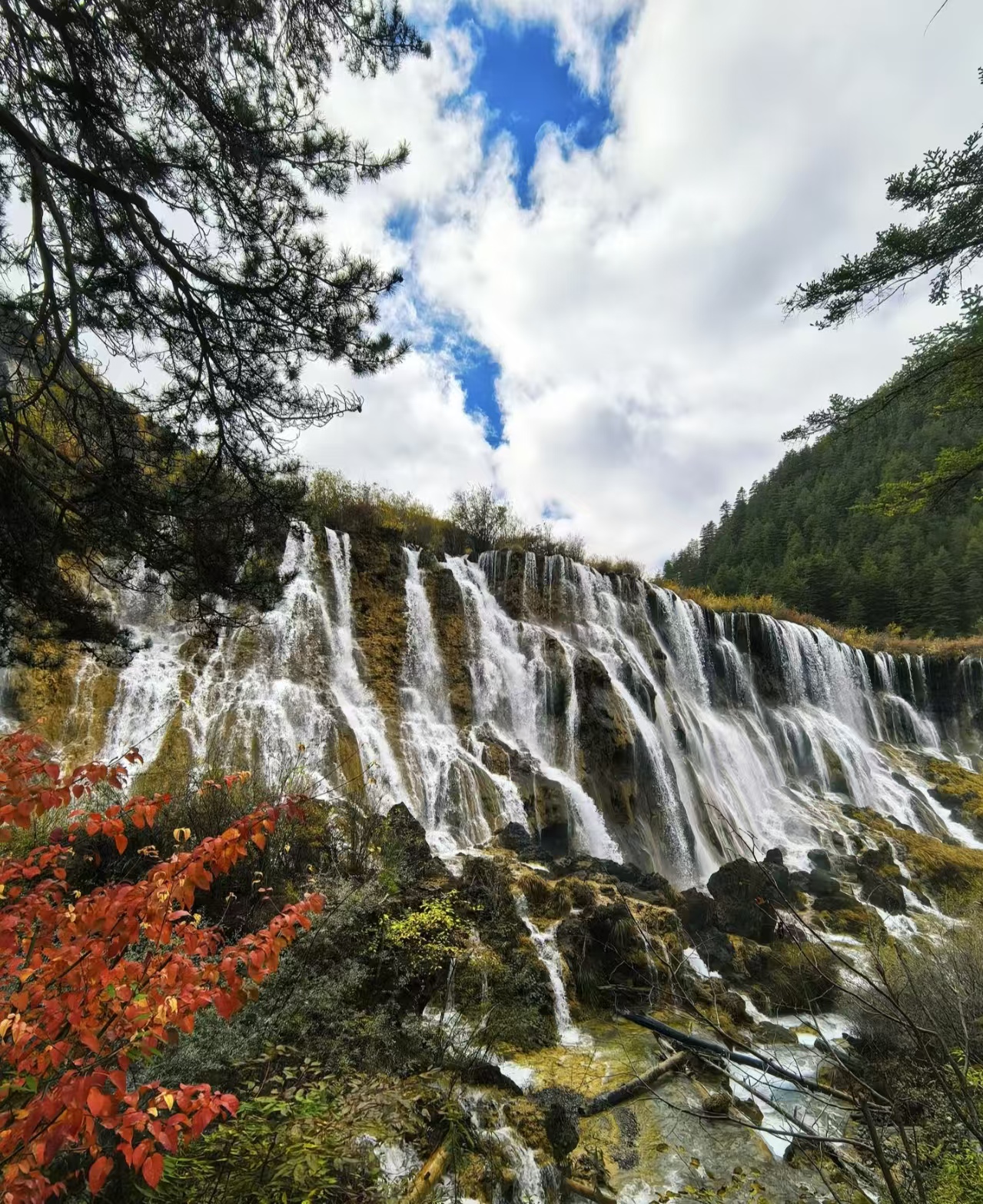
The lower artery featuring the Nuorilang Waterfall. We recommend hiking this section rather than taking the shuttle to truly feel the rhythm of the travertine dam system.

The Resurrection Story

On August 8, 2017, a 7.0-magnitude earthquake shattered the travertine dams and muddied the pristine waters. Many feared Jiuzhaigou was lost. However, a 2025 IUCN assessment confirmed an ecological recovery index of 98.88%. The lakes have cleared, and the blue has returned. This isn't just a story of "repair"—it is a testament to the geological resilience of the Karst system, a force of nature that far outlasts any human intervention.

Nuorilang Falls Post-earthquake Restoration and UNESCO World Heritage 1992 — Jiuzhaigou travel guide 2026 Korascale.

Nuorilang Falls Post-earthquake Restoration and UNESCO World Heritage 1992 — Jiuzhaigou travel guide 2026 Korascale.

The 2026 Logistics: A New Era of Access

The era of grueling, 10-hour bus rides through the Minjiang Canyons is over. Two major infrastructure shifts have redefined the Jiuzhaigou itinerary:

  • The High-Speed Rail (2024): Chengdu to the Jiuzhaigou vicinity now takes just 1 hour and 39 minutes.
  • The Express Highway (2025): A smooth, 4-hour drive from Chengdu now replaces the treacherous mountain passes of the past.

Seasonal Strategy: The Saturation Peak

  • Autumn (Oct - Nov): The "Absolute Peak." The fiery reds of the forest against the electric blue of the water create a visual overload. Tip: Visit in late October to avoid the Golden Week crowds.
  • Winter (Dec - Feb): The "Hidden Masterpiece." Frozen waterfalls and crystal ice edges. Most notably, the Five-Color Pool never freezes due to underground spring activity, standing out as a deep sapphire gem amidst the snow.
  • Summer (July - Aug): The water is at its most "Electric" due to high UV exposure, though crowds are at their peak.

The Korascale Difference

We operate outside the rigid shuttle schedules. We synchronize your arrival at Mirror Lake between 7:00 and 9:00 AM for the perfect, windless reflection before the ripples of the day begin. Our photography-specialist guides position you at the west side of Five Flower Lake at 11:00 AM to witness the Rainbow Glow—a rare optical phenomenon caused by sunlight refracting through mineral layers.

Jiuzhaigou is a dialogue between light and limestone.

Tibetan Village Jiuzhaigou and Jiuzhaigou Winter Blue Ice — Nine Villages Valley private tour by Korascale Bespoke Travel.

Tibetan Village Jiuzhaigou and Jiuzhaigou Winter Blue Ice — Nine Villages Valley private tour by Korascale Bespoke Travel.

Jiuzhaigou travel guide 2026 how to visitwhy is Jiuzhaigou water so blue scienceJiuzhaigou private tour bespoke Chengdu SichuanJiuzhaigouJiuzhaigou National ParkFive Flower LakeFive Color LakeNuorilang FallsMirror Lake JiuzhaigouLong Lake JiuzhaigouPearl Shoal JiuzhaigouAba Tibetan Qiang Autonomous PrefectureTravertine Calcium Carbonate LakesKarst HydrologyAlpine Karst JiuzhaigouTufa FormationHigh Altitude Lake ColorUNESCO World Heritage 1992UNESCO Biosphere Reserve 1997IUCN Protected Area Category VGiant Panda HabitatGolden Snub-nosed MonkeyJiuzhaigou Earthquake 2017Post-earthquake RestorationLewis Hamilton Jiuzhaigou 2026Tibetan Village JiuzhaigouNine Villages ValleyTibetan Buddhist Culture SichuanBest Time to Visit JiuzhaigouJiuzhaigou Autumn FoliageJiuzhaigou Winter Blue IceJiuzhaigou Photography GuideBespoke Travel ChinaKorascale

Frequently Asked Questions

Why is the water in Jiuzhaigou so blue — is it real or filtered?

˅
It is entirely real. Scientists from the US Geological Survey have measured Jiuzhaigou's lake water using colour calibration cards and found that the colour saturation is 300% higher than that of ordinary lakes — with no filtration or digital enhancement. The blue comes from three overlapping mechanisms: first, the extremely high concentration of calcium carbonate in the water causes suspended impurities to precipitate and sink, creating a transparency of up to 12 metres in lakes like Five Flower Lake — six times that of a typical lake — while the white travertine lakebed acts as a reflective surface that bounces blue light back upward; second, the high altitude of 2,000 to 3,100 metres thins the atmosphere and intensifies sunlight penetration, amplifying the same process that makes the sky blue; third, different aquatic plant communities on the lakebed (algae, stoneworts, ferns) contain varying chlorophyll concentrations that add green, amber, and orange tones within the blue water. The colour shifts continuously with time of day, viewing angle, and depth — which is why no two photographs of the same lake look identical.

Has Jiuzhaigou fully recovered from the 2017 earthquake?

˅
Substantially, yes. The magnitude 7.0 earthquake of August 8, 2017 caused significant damage to Jiuzhaigou's landscape — rupturing the travertine dams of Nuorilang Waterfall and Huohua Lake, turning Five Flower Lake temporarily turbid, damaging roads, and prompting complete closure of the park for six months. The IUCN's 2025 Conservation Outlook Assessment confirms that the site's overall ecological restoration has reached 98.88% of its pre-earthquake benchmark, with all three main valleys — Rize, Zechawa, and Shuzheng — fully reopened as of 2023 and the forested scenic area recovering 3.868 km² of habitat. Five Flower Lake's calcium carbonate deposition system reactivated naturally, restoring the water to its original blue. Nuorilang Waterfall — the most symbolically damaged landmark — was substantially reconstructed by 2019. The recovery is widely cited as one of the most successful post-earthquake ecological restorations of a UNESCO World Heritage site on record.

What is the best time of year to visit Jiuzhaigou, and does it matter which season?

˅
Season matters enormously at Jiuzhaigou because the park's appearance changes completely across the year. Autumn — mid-September to early November — is the most celebrated period, when deciduous forest across the valley turns gold, orange and red while the lake colours reach their peak saturation; the combination of autumn foliage reflected in mineral-rich turquoise water is what makes Jiuzhaigou one of the most photographed natural sites in China. Mid-October is the sweet spot: past the National Holiday crowds of early October, with peak foliage still on the trees. Winter (December to February) is the park's best-kept secret — visitor numbers drop sharply, Nuorilang Waterfall freezes into a curtain of ice, and Five Color Lake (fed by underground springs that prevent freezing) turns a deep sapphire that many photographers consider its most beautiful state. Summer offers the most electrically vivid blue water under direct overhead sunlight, but is the busiest season. Spring is quieter with fresh green canopy and apricot blossoms along the valley sides. Korascale recommends mid-October as the primary window and winter as the specialist alternative for serious photographers.

How do I get to Jiuzhaigou from Chengdu in 2025 and 2026?

˅
Access to Jiuzhaigou has improved dramatically in the past two years. Since September 2024, a high-speed rail line connects Chengdu to the station nearest Jiuzhaigou in approximately 1 hour and 39 minutes — reducing a journey that previously required a 10-hour mountain bus ride or a short flight. Since September 2025, a new expressway also links Chengdu to Jiuzhaigou in approximately 4 hours by private vehicle — replacing the older road through the Minjiang canyon that was vulnerable to landslides and rockfalls. For travelers who prefer flying, Jiuhuang Airport receives daily flights from Chengdu (about 1 hour), Chongqing, Beijing, and Shanghai. Korascale's Chengdu base coordinates all three routing options for private Jiuzhaigou itineraries, including multi-day packages that combine Jiuzhaigou with Huanglong Scenic Area — 65 kilometres to the north — in a single journey.

What makes a private Korascale Jiuzhaigou tour different from visiting independently?

˅
Three practical differences define the gap. First, timing: Jiuzhaigou's park shuttle bus runs on a fixed timetable that concentrates most visitors at the same sites in the same sequence — typically arriving at Five Flower Lake mid-morning, the highest-traffic window. Korascale's private vehicle arrangement allows early-morning arrival at Mirror Lake during its windless window (7 to 9 AM), when the water reflects the surrounding peaks without surface ripple, before the shuttles begin; then Five Color Lake in upper Zechawa Valley before 10 AM for optimal photography angles; then Five Flower Lake in the afternoon light when crowds have moved to Shuzheng Valley. Second, interpretive depth: the calcium carbonate science, the Tibetan lake-naming traditions, and the earthquake recovery story all become experiential rather than incidental with a knowledgeable private guide. Third, the option to extend to Huanglong — Jiuzhaigou's UNESCO neighbour 65 kilometres north, with its terraced multi-coloured calcite pools — as part of a coherent two-site itinerary rather than a rushed add-on. Contact Korascale to begin designing your Jiuzhaigou private itinerary from Chengdu.