
This guide is the definitive decision-making tool for your 2026 China journey. We don't believe in the "perfect itinerary" because that doesn't exist. Instead, we believe in the "Strategic Start." Shanghai is not just a city with international flights; it is China’s most efficient "Reaction Point." From this neon-lit hub, you are 1 hour from the classical gardens of Suzhou, 4.5 hours from the imperial grandeur of Beijing via high-speed rail, and within a 3-hour flight of almost every major cultural pulse in the country.

More importantly, Shanghai provides a vital "Cultural Buffer." Its internationalized infrastructure allows you to adjust your internal clock and physical comfort before diving into the deeper, raw layers of the Chinese interior.
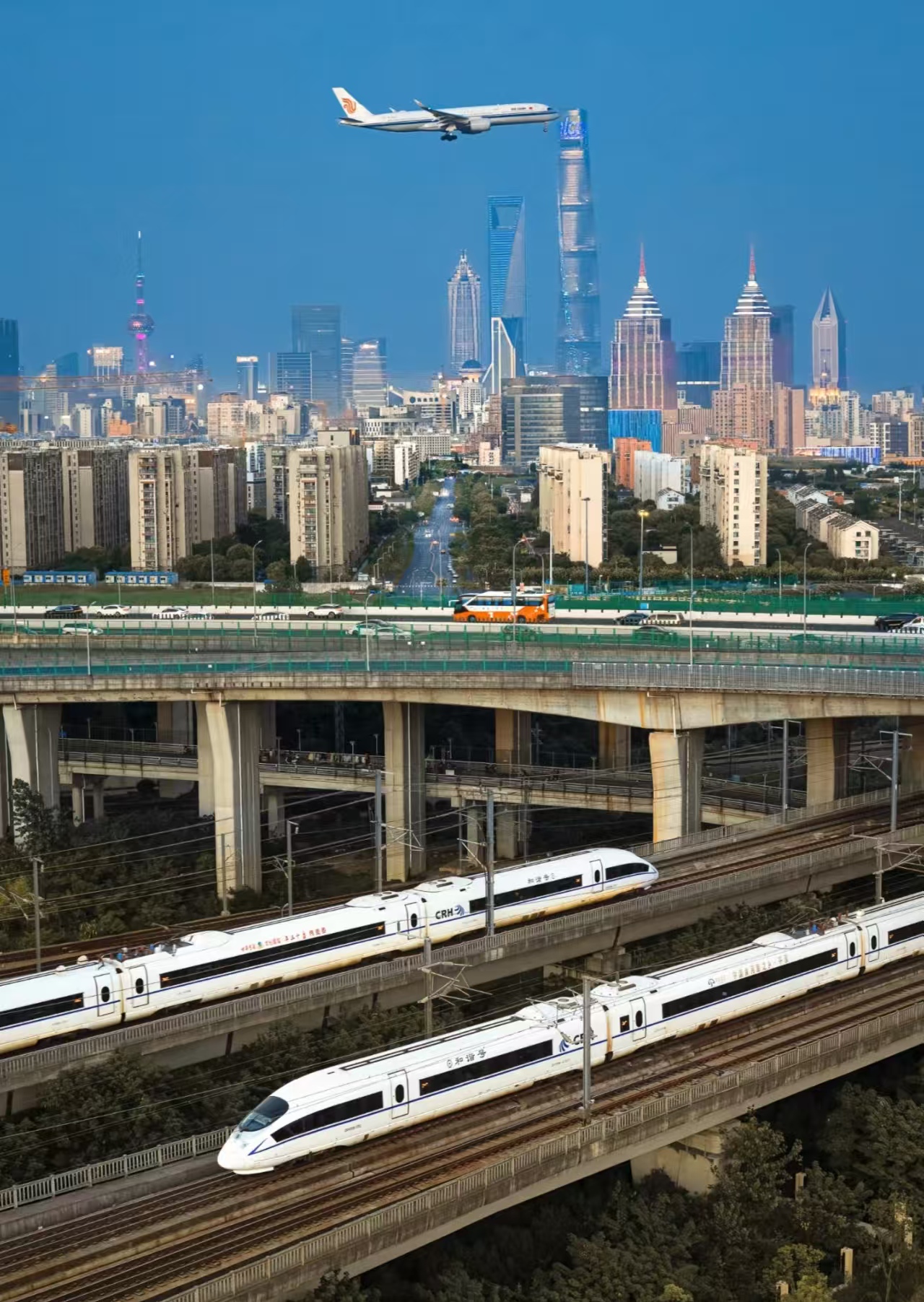
How to Explore China Starting from Shanghai | China Route Guide 2026, China Multi-City Tour - Korascale Bespoke Travel

How to Explore China Starting from Shanghai | China Route Guide 2026, China Multi-City Tour - Korascale Bespoke Travel

The Korascale Route Map: 6 Strategic Narratives

We have organized these six routes by their "Narrative Arc"—the internal logic of how one city speaks to the next—and categorized them by the time required to experience them correctly.

1. The Regional Deep-Dive: Jiangnan Civilization (5–7 Days)

  • The Narrative: "The scholar’s retreat." Moving from the globalized energy of Shanghai to the intimate, poetic scale of the canal cities.
  • The Route: Shanghai → Suzhou (1 night) → Hangzhou (2 nights) → Huangshan (2 nights).
  • Logistics: All via High-Speed Rail (HSR). No flights needed.
  • The Korascale Touch: Private tea picking in Longjing and a sunrise hike on Huangshan with a specialized mountain photography guide.

2. The Power Shift: From Globalization to Empire (7–10 Days)

  • The Narrative: "The North-South Axis." A direct comparison between the 19th-century treaty port and the 800-year-old imperial capital.
  • The Route: Shanghai (3 nights) → Beijing (4 nights) → Optional: Xi'an (2 nights).
  • Logistics: Shanghai to Beijing HSR (4.5 hrs) is non-negotiable. It is faster "city-center to city-center" than flying when you account for airport buffers.
  • The Korascale Touch: A "Parallel History" tour comparing the architecture of the Shanghai Bund with the Forbidden City’s Central Axis.

3. The Sensory Collision: Coastal Glitz to Inland Soul (10–14 Days)

  • The Narrative: "Two Chinas." A deliberate shock to the system, moving from the efficient East to the spicy, slow-paced West.
  • The Route: Shanghai → Chengdu (3 nights) → Chongqing (2 nights) → Xi'an (3 nights) → Beijing.
  • Logistics: Shanghai to Chengdu (3 hr flight) is vastly superior to the 10-hour train.
  • The Korascale Touch: Behind-the-scenes access to the Panda Research base and a private "Spices of the Silk Road" culinary tour in Xi'an.

4. The Architect’s Ark: Northern Heritage (10–14 Days)

  • The Narrative: "The evolution of wood." For those obsessed with the physical proof of history.
  • The Route: Shanghai → Datong (3 nights) → Pingyao (2 nights) → Wutai Mountain (2 nights) → Beijing.
  • Logistics: Flight to Datong, then HSR and private cars between the Shanxi hubs.
  • The Korascale Touch: Specialist architectural historians who decode the Tang Dynasty joinery at Foguang Temple.

5. The Grand Narrative: The Full Circle (18–21 Days)

  • The Narrative: "The Comprehensive Ark." Combining the Imperial, the Spiritual, and the Sensory.
  • The Route: Shanghai → Guilin/Yangshuo → Chengdu → Lhasa (Tibet) → Xi'an → Beijing.
  • Logistics: A mix of 4 domestic flights and HSR sectors.
  • The Korascale Touch: Full permit handling for Tibet and a private "Hutong to High-Rise" documentary-style photography session in Beijing.

6. The Southern Trade Route: Merchant & Maritime (5–7 Days)

  • The Narrative: "The Pragmatic South." Focusing on the entrepreneurs who built the diaspora.
  • The Route: Shanghai → Chaozhou (2 nights) → Xiamen/Fujian Tulou (3 nights).
  • Logistics: Short flights and local private transfers.
  • The Korascale Touch: A specialized tour of the Fujian Tulou (Earth Buildings) focusing on the defensive logic of Hakka architecture.
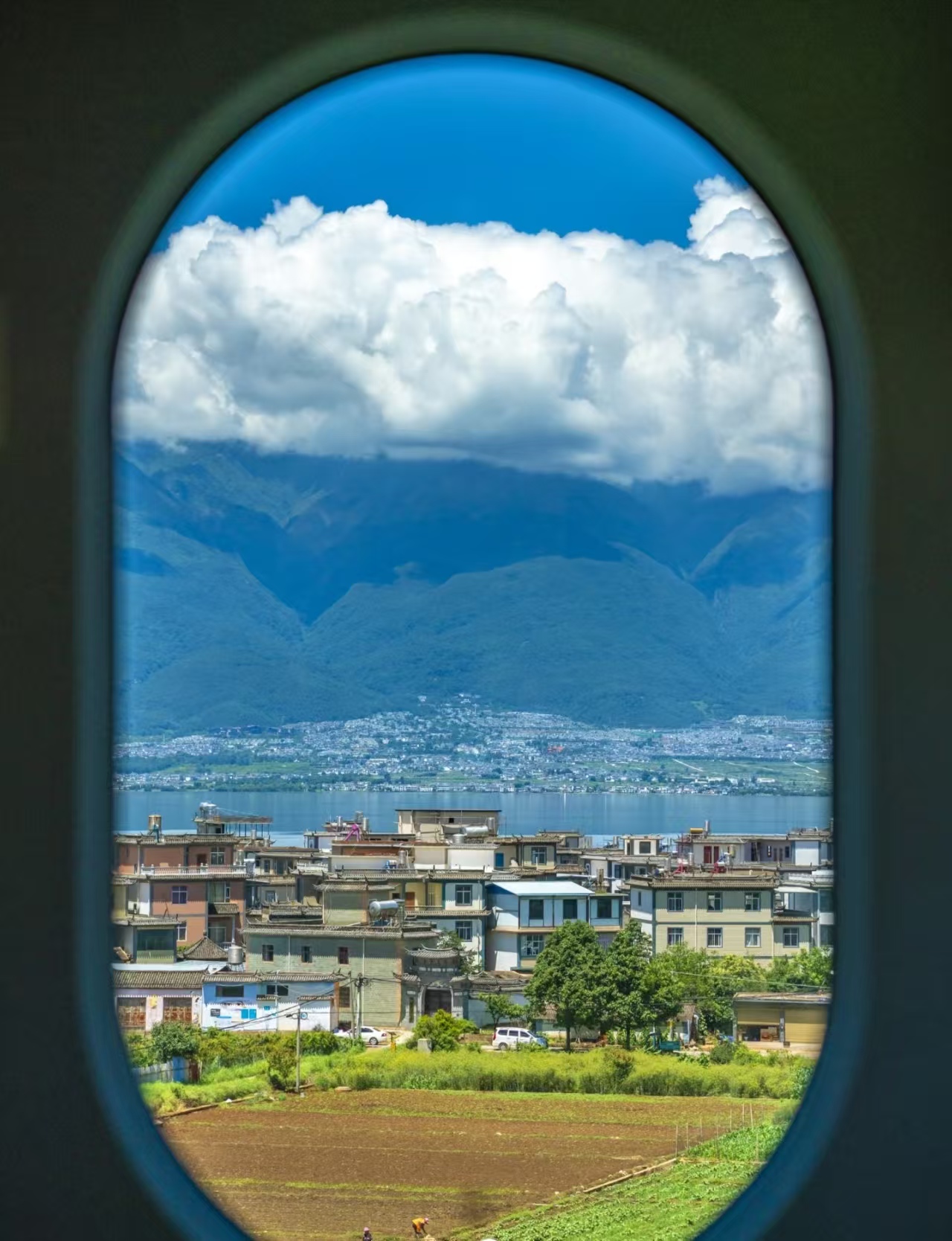
China High Speed Rail Guide and Shanghai to Beijing itinerary — China Golden Triangle Tour by Korascale.

China High Speed Rail Guide and Shanghai to Beijing itinerary — China Golden Triangle Tour by Korascale.

The Korascale Philosophy of Design

Beyond the routes, we apply three "Hard Rules" to every itinerary we build from Shanghai:

Rule 1: Optimize for "Net Time," Not Ticket Price A flight from Shanghai to Beijing might be $50 cheaper, but by the time you add 1.5 hours check-in + 30 mins boarding + 45 mins air-traffic delays + 1 hour transit from the remote airport, your Net Time is 6 hours. The HSR is 4.5 hours from downtown to downtown. We always choose the path that preserves your most valuable asset: Your hours of daylight.

Rule 2: Contrast as Narrative Don't just stack cities like boxes. A good route makes the next city a response to the last. Shanghai → Suzhou is a change of scale. Shanghai → Chengdu is a change of worldviews. We design "Conversational Itineraries" where each stop deepens the argument of the previous one.

Rule 3: Respect the "Buffer Zone" China is dense. Transitioning from the high altitude of Lhasa directly into the chaos of Shanghai center is a recipe for travel fatigue. We build in "White Space" and "Buffer Days" at each regional transition to allow your brain to catch up with your passport.

We don't design trips that "cover" the most cities. We design journeys where every city produces meaning. Tell us your window of time, your interests, and your comfort with cultural friction. We will build you a narrative map—not a list, but a legacy.
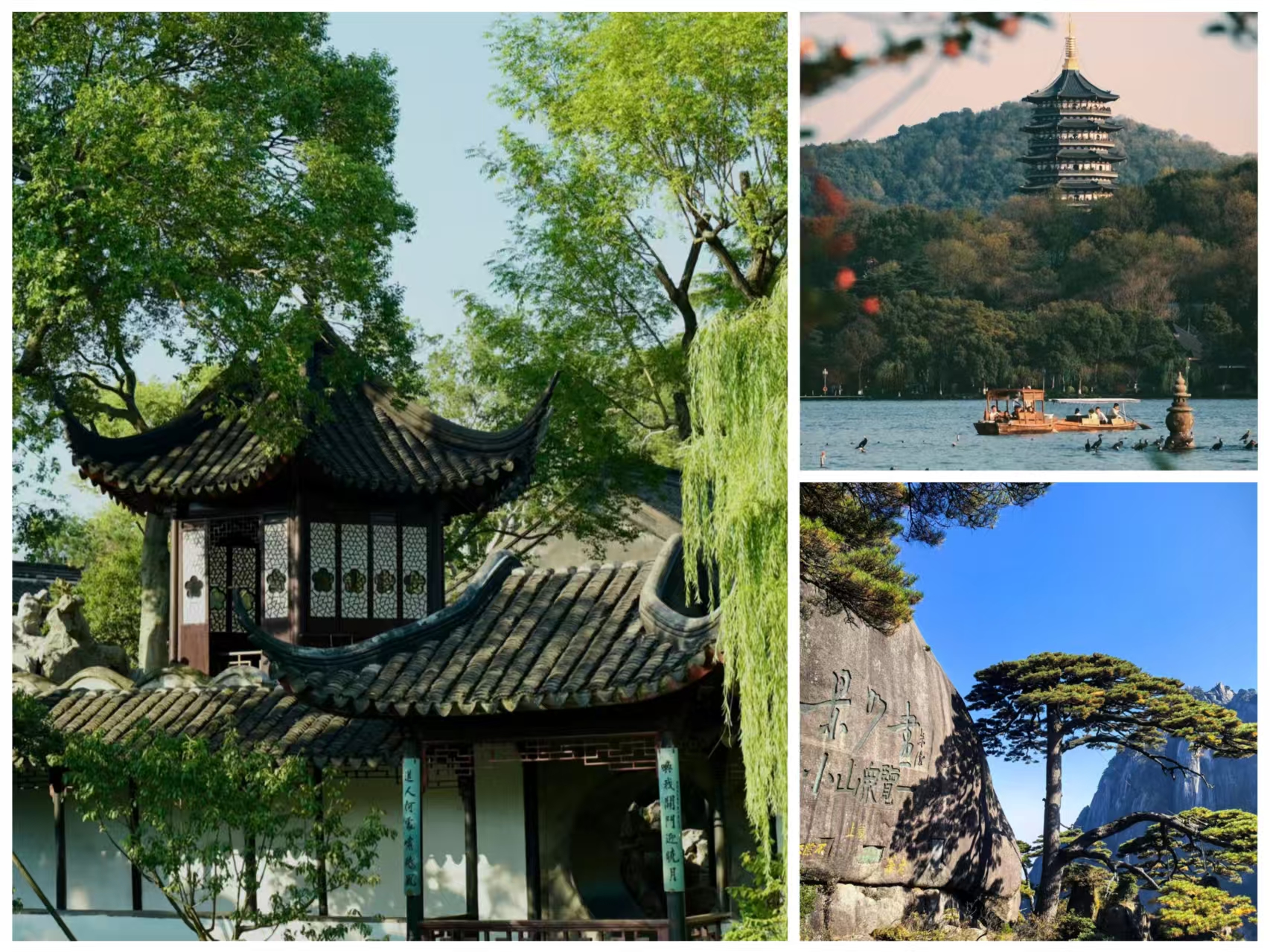
Yangtze Delta Route Suzhou Hangzhou Huangshan — China 2 Weeks Itinerary from Shanghai by Korascale Bespoke Travel.
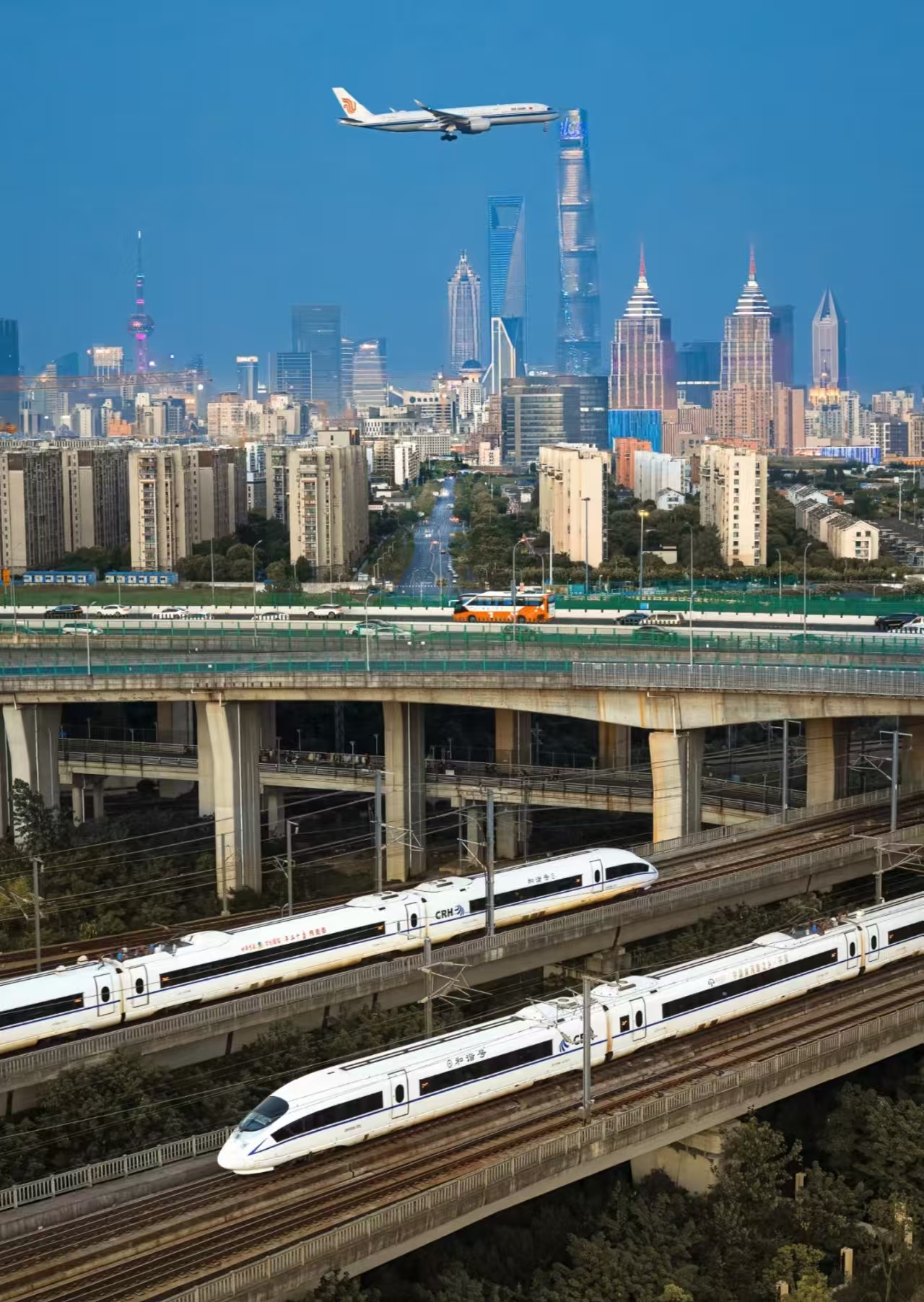
Yangtze Delta Route Suzhou Hangzhou Huangshan — China 2 Weeks Itinerary from Shanghai by Korascale Bespoke Travel.

China itinerary starting from Shanghai 2026 complete guideShanghai to Beijing Chengdu Xian route best way travelChina private tour from Shanghai bespoke multi-cityShanghaiBeijingXianChengduHangzhouSuzhouGuilin YangshuoZhangjiajieChongqingHuangshanJiuzhaigouShanghai to Beijing itineraryShanghai to Chengdu routeShanghai to Xian travelChina Golden Triangle TourYangtze Delta RouteChina Southwest RouteShanghai Guilin ZhangjiajieChina Itinerary PlanningChina Route Guide 2026China Multi-City TourChina High Speed Rail GuideBest Way to Travel ChinaChina 2 Weeks ItineraryChina 3 Weeks ItineraryWhere to Go After Shanghai ChinaShanghai Entry Point China TourChina Trip from ShanghaiShanghai Hub China ItineraryBespoke Travel ChinaKorascale

Frequently Asked Questions

What is the best China itinerary starting from Shanghai for 2 weeks?

˅
For two weeks beginning in Shanghai, the most balanced itinerary is the classic Golden Triangle extension: three days in Shanghai, then fly to Xi'an for three days (Terracotta Army, the ancient city wall, Muslim Quarter), then high-speed train to Beijing for four to five days (Forbidden City, hutongs, Mutianyu Great Wall), with two remaining days as buffer either adding Chengdu via a short flight or extending Beijing before departing internationally. This sequence — modern global city to Silk Road ancient capital to imperial seat — creates a narrative arc that builds in historical density rather than scattering impressions. An alternative for travellers more interested in landscape and contemporary culture than imperial history is Shanghai (three days) to Chengdu by flight (three days) to Chongqing (two days) and back to Shanghai — which delivers the maximum cultural contrast in two weeks. Korascale designs two-week itineraries from Shanghai for both of these frameworks, with private vehicles throughout and specialist guides in each city rather than a single national guide.

Is it better to travel from Shanghai to Beijing by high-speed train or by plane?

˅
High-speed train is almost always the better choice for the Shanghai–Beijing journey, and the reason is net time rather than ticket time. A flight takes approximately 2.5 hours in the air, but requires arriving at the airport 90 minutes early, plus the 45-minute taxi from Pudong Airport to central Beijing on arrival — totalling roughly 5 to 5.5 hours door to door. The G-train takes approximately 4.5 hours and runs city centre to city centre, from Shanghai Hongqiao or Shanghai Railway Station directly to Beijing South Station, which is well-connected to the central hotel districts. Net time advantage of the train: roughly the same or marginally faster, with significantly lower stress, no baggage check, and the option to work, read, or eat throughout the journey. The train also departs from the western side of Shanghai rather than Pudong, which saves the long taxi out to the airport for most central hotel locations. Korascale coordinates all rail bookings as part of private itinerary design and recommends the train for this specific route in almost every case.

What are the best day trips from Shanghai, and which ones are worth the time?

˅
Three day trips from Shanghai are genuinely worth the time; others are marginal. Suzhou is the strongest: 30 minutes by high-speed train, it holds the finest classical garden architecture in China (Humble Administrator's Garden, Lingering Garden) and a canal district that provides genuine contrast to Shanghai's scale and modernity — it is the best single day trip available. Hangzhou is worth a full day or ideally an overnight: West Lake is one of China's most photogenic landscapes, and combining it with a Longjing tea plantation visit in the hills above the lake and the China National Silk Museum makes it substantial. Zhujiajiao water town, roughly an hour from Shanghai by bus or car, is a frequent recommendation but requires managing expectations — it is heavily commercialised on weekends and most of its authenticity has been diluted by tourism. The most underrated day trip is Tongli, a smaller water town in Jiangsu that receives far fewer visitors than Zhujiajiao and preserves more of its original residential character. Korascale can design any of these as private day itineraries with drivers and specialist guides.

What is the most efficient route if I only have 7 days in China starting from Shanghai?

˅
Seven days from Shanghai is enough for a meaningful trip if the route is designed efficiently. The most common mistake is attempting three cities in seven days — the travel time and adjustment cost of each transition leaves too little time in any one place. Korascale's recommendation for seven days is one of two approaches: either stay within the Yangtze Delta (Shanghai two nights, Suzhou one night, Hangzhou two nights, with half a day in a village outside Hangzhou) which requires no flights, delivers exceptional cultural depth, and keeps logistical complexity very low; or do a direct Shanghai–Beijing pairing (three nights each, high-speed train between them) which gives two complete urban experiences at either end of China's cultural axis. The latter is more dramatic in contrast, the former is richer in any individual place. Both are superior to the three-city sprint that most one-week itineraries attempt. Seven days is also enough to fly to Chengdu (three days) after two days in Shanghai, treating the trip as a pure introduction to contemporary Southwest China and accepting that historical depth will come on a return visit.

How does Korascale design a multi-city China itinerary starting from Shanghai?

˅
Korascale's route design process starts with four questions before any city or attraction is mentioned. First, what is the traveller's primary motivation — history, landscape, food culture, contemporary China, or a specific theme like architecture or art? This determines which regional block should anchor the itinerary. Second, how much time is available, and what is the realistic density for that time? A two-week itinerary with five cities is usually too many; two weeks with three cities is usually right. Third, what is the traveller's tolerance for logistical complexity and cultural unfamiliarity? A first-time Asia visitor needs more buffer, fewer transitions, and higher-familiarity environments at the start of the trip. Fourth, where does the traveller want to end up — do they fly home from Shanghai, or is a different departure city more convenient? The answer shapes the route's directionality significantly. Once these four questions are answered, we design the route as a narrative arc rather than a city list: each destination should be a response to or an extension of the one before it, so the overall journey has a shape and a meaning rather than just a sequence. Contact us with your travel dates and interests and we will begin the design process.