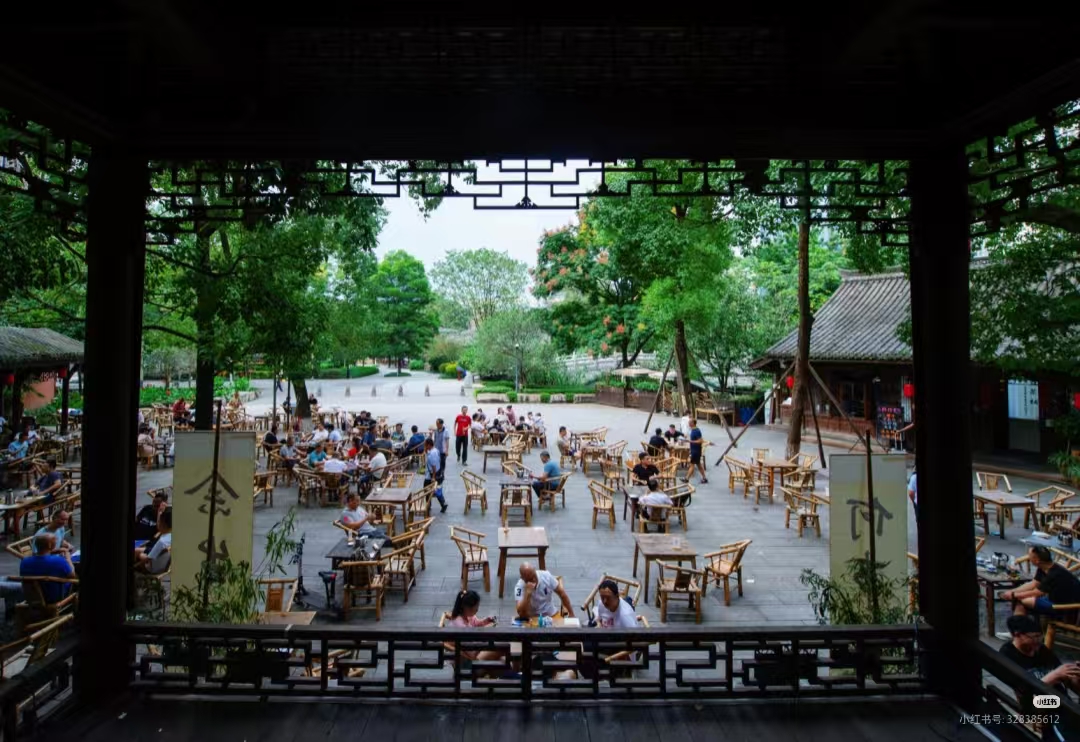


Chengdu is often described through pandas, hotpot, and a relaxed pace of life. But to understand the city more deeply, start with a teahouse.
A Chengdu teahouse is not simply a place to drink tea. It is a public living room, a social network, a place for conversation, negotiation, cards, ear cleaning, and long afternoons where time moves differently. The tea matters, but it is rarely the whole point.
This guide explains how Chengdu teahouse culture works, what gaiwan tea means, where to experience it, and how to include a teahouse morning in a private Chengdu itinerary without turning it into a staged performance.
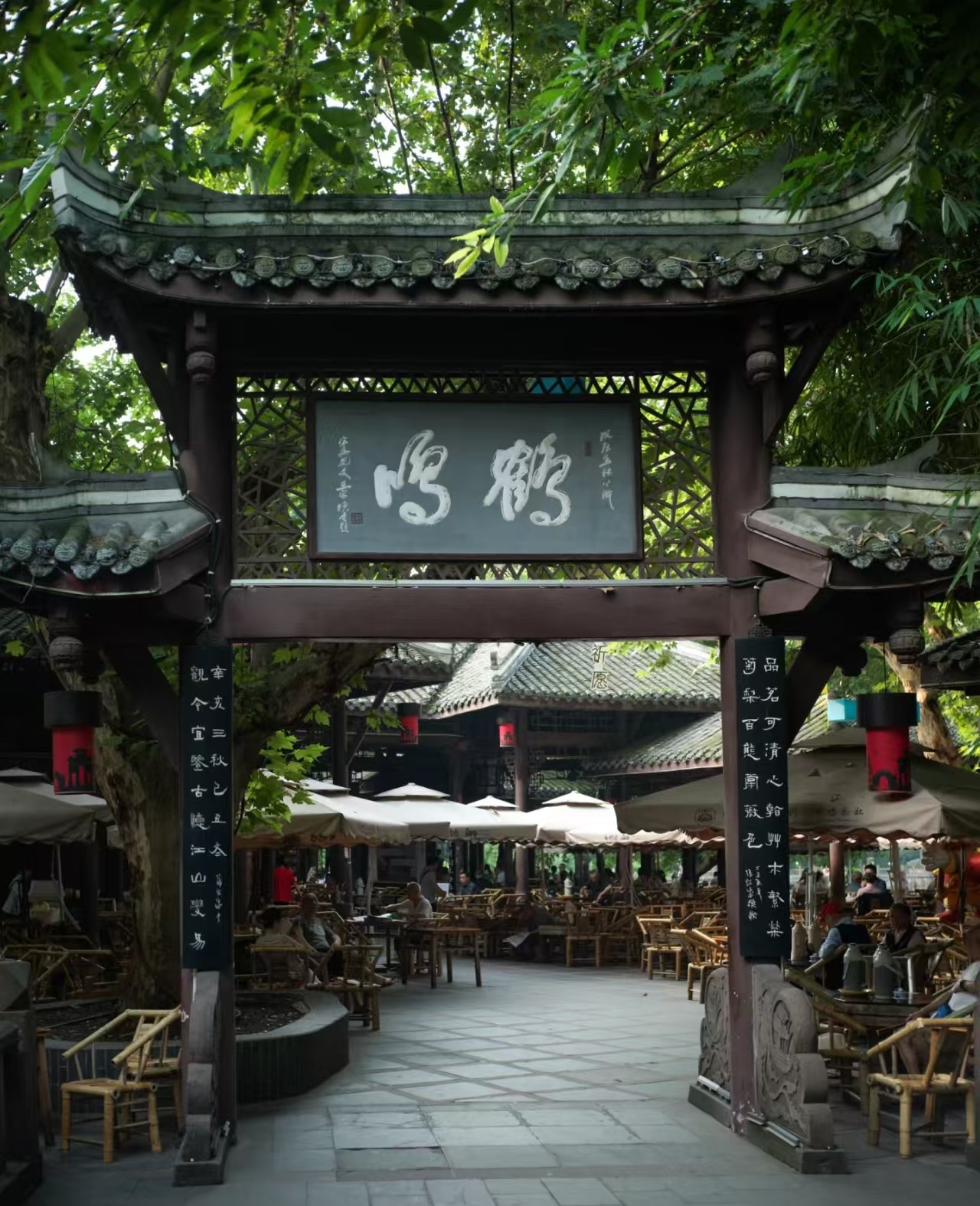
Chengdu Teahouse: The Art of Going Nowhere Slowly | Gaiwan Tea, Ba Shi Philosophy - Korascale Bespoke Travel
Why Teahouses Matter in Chengdu
In many cities, cafés are places to meet briefly before moving on. In Chengdu, teahouses invite people to stay.
A traditional teahouse can hold many layers of city life at once: elderly residents reading newspapers, friends playing cards, business conversations taking place quietly, visitors observing the rhythm of the city, and regulars who come not for the tea itself but for the seat, the shade, the noise, and the feeling of belonging.
This is why teahouses are often described as a smaller version of Chengdu itself. They reveal the city’s comfort with slowness, sociability, and daily pleasure.
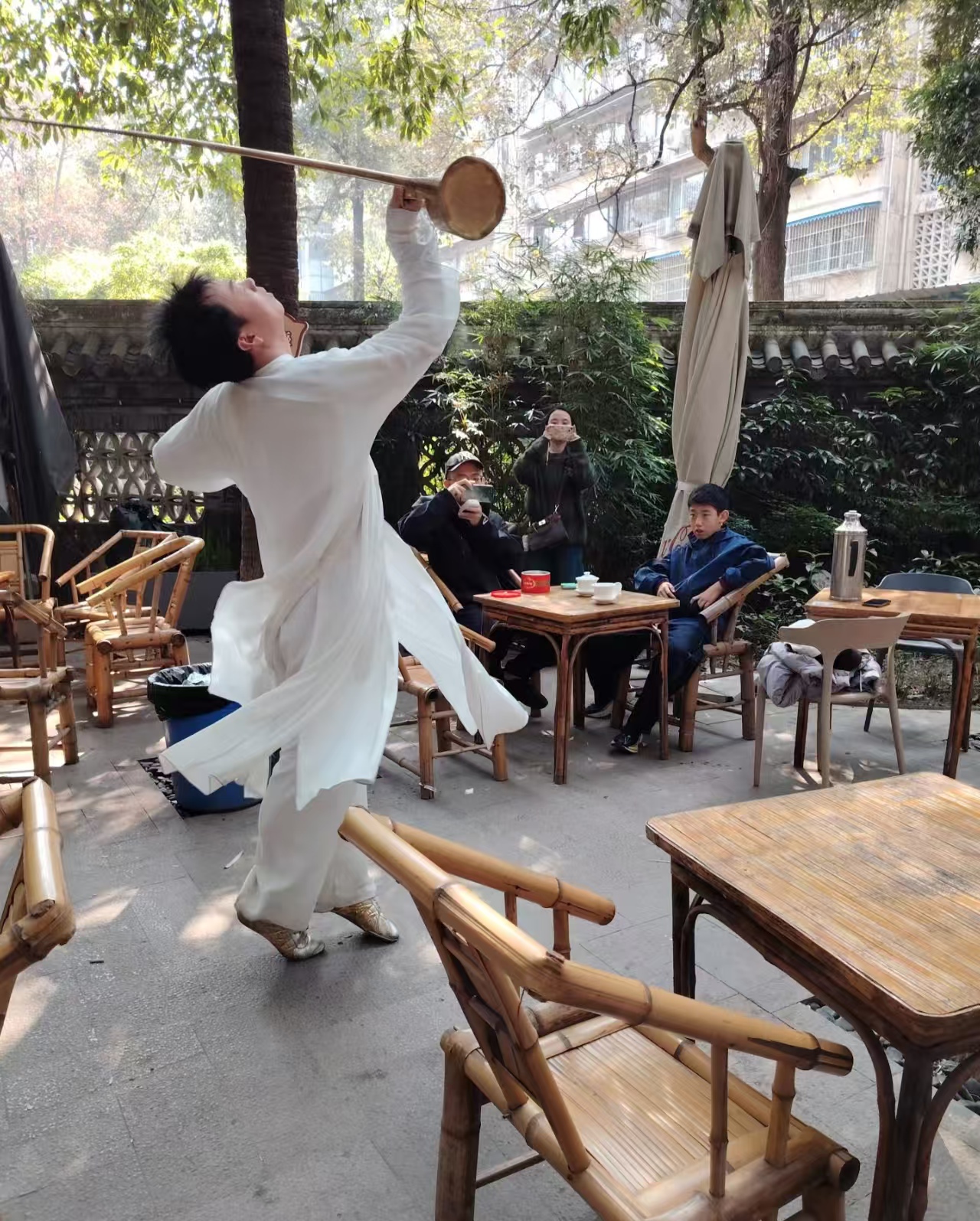
Long Spout Teapot performance and Gaiwan Tea at People's Park Chengdu — Korascale private cultural tour.
What “Ba Shi” Means in Daily Life
One of the most useful words for understanding Chengdu is ba shi. It roughly means comfortable, satisfying, or just right, but the feeling is broader than a direct translation.
Ba shi is the pleasure of sitting under trees with a cup of jasmine tea. It is the freedom to spend a morning talking without a strict schedule. It is not laziness. It is a different relationship with time.
For travelers, understanding ba shi helps explain why Chengdu should not be planned like a checklist city. A good Chengdu itinerary needs space: for tea, food, parks, neighborhoods, and small pauses between major sights.
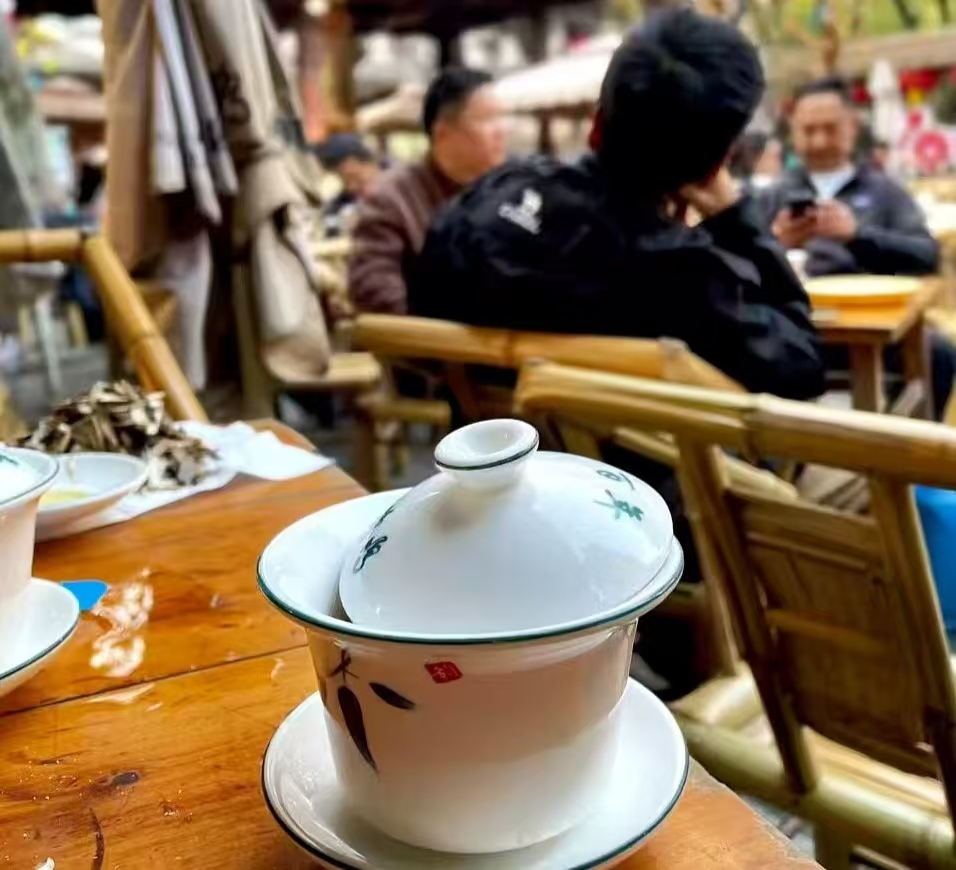
Bai Longmenzhen and Mahjong Culture in Ming Qing Teahouse — authentic Chengdu tea experience by Korascale
Gaiwan Tea: The Small Ritual That Opens the Door
The gaiwan is the classic tea vessel of Chengdu teahouses. It consists of a lid, a bowl, and a saucer. For locals, it is practical; for visitors, it is one of the easiest ways to enter the language of the teahouse.
The lid controls the tea leaves and heat. It can also communicate simple signals. A tilted lid may ask for more hot water. A cup placed aside can show that the seat is still taken. These gestures are small, but they turn tea drinking into a social code.
Learning how to hold, sip, and signal with a gaiwan gives visitors a more intimate understanding of Chengdu than simply watching a tea performance.
Where to Experience Chengdu Teahouse Culture
Heming Teahouse in People’s Park
For most first-time visitors, Heming Teahouse in People’s Park is the most accessible introduction to Chengdu teahouse life.
The key is timing. Go early in the morning, before the space becomes crowded with tourists. At that hour, the teahouse still belongs mostly to local residents: people reading, chatting, playing cards, or simply occupying their usual seat.
This is not a hidden place, but it is still meaningful when visited at the right pace and with the right context.
Guanyinge Old Teahouse
For travelers who want a deeper and less polished experience, Guanyinge Old Teahouse offers a very different atmosphere. It sits outside central Chengdu and requires more time, but the reward is a stronger sense of age, texture, and continuity.
This kind of visit is not suitable for every itinerary. It works best for travelers who are comfortable with slower pacing and who want to understand Chengdu beyond the most convenient urban highlights.
Modern Tea Spaces in Chengdu
Chengdu’s tea culture is not frozen in the past. Modern tea spaces, design-led teahouses, and craft-focused studios show how younger generations reinterpret tea through aesthetics, architecture, and lifestyle.
A strong Chengdu itinerary can combine both sides: an old public teahouse in the morning and a more contemporary tea space later in the day. Together, they show how tradition continues to evolve instead of becoming a museum object.
Long-Spout Teapots: Performance vs. Everyday Culture
Many visitors associate Chengdu tea culture with the long-spout teapot performance. It is visually impressive and can be enjoyable to watch, but it should not be treated as the essence of Chengdu teahouse culture.
The deeper experience is quieter. It is in the way people sit, how long they stay, how tea is refilled, how conversations unfold, and how a public space becomes part of everyday life.
For this reason, Korascale treats performance as optional context, not the center of the experience.
How Korascale Designs a Chengdu Teahouse Morning
Korascale designs Chengdu teahouse experiences as part of a wider understanding of the city, not as a quick activity added between sightseeing stops.
A typical private morning may begin with a local breakfast, followed by an early visit to People’s Park and a traditional teahouse. A guide can explain gaiwan etiquette, local expressions, ear-cleaning culture, and the social role of the teahouse. For travelers with more time, the route can extend to older teahouses outside the city or to a modern tea space that reflects Chengdu’s contemporary design culture.
The goal is simple: not to consume a performance, but to read the city through one of its most important daily spaces.